
Here is something most people only discover after the damage is done: Qatar is one of the worst places on earth to own untreated wooden furniture. Not because the furniture is low quality. Not because the owners are careless. But because the climate here does something to wood that most people from outside the region simply do not expect.
I have seen brand-new dining tables crack down the centre within eight months of delivery. I have watched imported bedroom sets — the kind that cost tens of thousands of riyals — develop warped drawer fronts and popped veneers by their second summer.
If you want to maintain wooden furniture in Qatar’s climate genuinely, you need to understand what is actually happening to the wood, not just follow a list of tips. This guide is written from hands-on experience with furniture restoration across Doha, Qatar, and it covers the full picture: why Qatar damages wood, what to do about it season by season, when to call a professional, and what mistakes to avoid.
Why Qatar’s Climate Attacks Wood So Aggressively
Qatar sits in the Arabian Gulf, and the climate here is not just hot. It is extreme in multiple directions at once, and wood suffers from each.
Outdoors in summer, temperatures routinely exceed 45°C. Indoors, air conditioning is cranked down to 20°C or lower. That swing — sometimes 25 degrees or more between the outside air and your living room — happens repeatedly, all day, every day, for six months of the year.
Research from the Forest Products Laboratory shows that humidity swings of more than 10% cause measurable dimensional changes in wood. In Qatar, those swings can happen within a single afternoon when someone opens a door, turns off the AC, or brings outdoor furniture inside. The wood does not get a chance to stabilize.
The Foundation: Control What Surrounds the Wood
Before any oil, polish, or treatment, the most effective thing you can do is manage the environment your furniture sits in. This is where most people in Doha miss the biggest opportunity.
Keep Humidity Stable Indoors
The target indoor humidity for wood furniture is between 40% and 60%. Below that, wood dries out and contracts. Above that, it swells. In Qatar’s dry winters, indoor humidity can drop well below 30% without a humidifier running.
A basic plug-in humidifier in each main room makes a real difference, especially between November and February. In spring and early summer, when Gulf humidity rises before the heat peaks, the opposite applies — dehumidifying or simply running the AC helps prevent swelling.
A digital hygrometer costs very little and tells you exactly where your indoor humidity sits. If you own valuable wood furniture, it is worth having one.
Position Furniture Away From Problem Zones
- Never place wooden furniture directly under an AC vent. The constant dry airflow pulls moisture from the surface faster than the wood can replenish it.
- Keep furniture away from external walls, which absorb outdoor heat and radiate it inward.
- Use UV-filtering window film or lined curtains wherever direct sunlight falls on wood. UV exposure bleaches and dries wood more aggressively than heat alone, and in Qatar, sunlight is intense for most of the year.
- Put felt pads under every leg. Tiled and marble floors in Qatar conduct heat and cold, and direct contact between wood legs and flooring accelerates moisture transfer.
These are not complex steps. But skipping them means no amount of oiling or polishing will fully compensate.
Cleaning Without Causing Damage
Wipe furniture down two or three times a week using a lightly dampened microfibre cloth, then follow with a dry one. Never leave moisture sitting on the surface. For stains or sticky residue, a cloth dampened with very diluted dish soap works well — but dry the area immediately and completely.
Avoid anything spray-based with bleach, ammonia, or silicone. These either strip the finish or leave a coating that prevents future conditioning treatments from penetrating.
Seasonal Maintenance: What to Do and When
Qatar has two dominant seasons when it comes to wood care, and each requires a different focus.
Summer (May to September): Fighting the Dry
This is the hardest season for wood furniture in Doha. The AC runs non-stop. Indoor air becomes very dry. Wood loses its natural oils faster than in almost any other environment.
What to do:
- Oil or wax your furniture every four to six weeks using a tung oil, linseed oil, or beeswax-based product — not a silicone spray
- Inspect every joint and connection for early loosening. A chair leg that wobbles slightly in June becomes a structural failure by August if ignored
- Check veneer edges for any lifting at corners or along seams, and press them back with appropriate adhesive before they worsen
- Use felt pads consistently under legs to reduce floor heat transfer
- Run a humidifier if your indoor humidity consistently drops below 35%
For antique pieces, high-value imported furniture, or anything structurally complex, summer is a good time to bring in a professional before the damage compounds. The carpenter services at Doha Home Fix include full structural assessments and conditioning treatments that go well beyond what surface-level products can achieve.
Winter and Transition Seasons (October to April): Watching for Moisture Swings
Qatar’s cooler months are more comfortable for people, but they can be tricky for wood. Coastal fog, occasional rain, and higher ambient humidity mean wood absorbs more moisture than it does in peak summer.
What to do:
- Scale back humidifier use during humid spells and monitor your indoor readings
- If you bring outdoor or balcony furniture inside for cooler evenings, check joints and undersides for trapped moisture before it sits overnight on indoor flooring
- Inspect any areas where wood shows signs of swelling — drawers that stick suddenly, doors that no longer close cleanly
- Lightly re-sand and re-seal any exposed raw wood grain that has swollen above the surrounding surface
- Tighten hardware across the board — humidity movement loosens screws and hinges gradually over the season
When You Need a Professional Carpenter in Doha
There is a real limit to what home maintenance can achieve once damage has set in. Polishing a cracked surface does not fix the crack. Oiling a warped panel does not straighten it. And attempting structural repairs without the right tools and materials often makes things worse, not better.
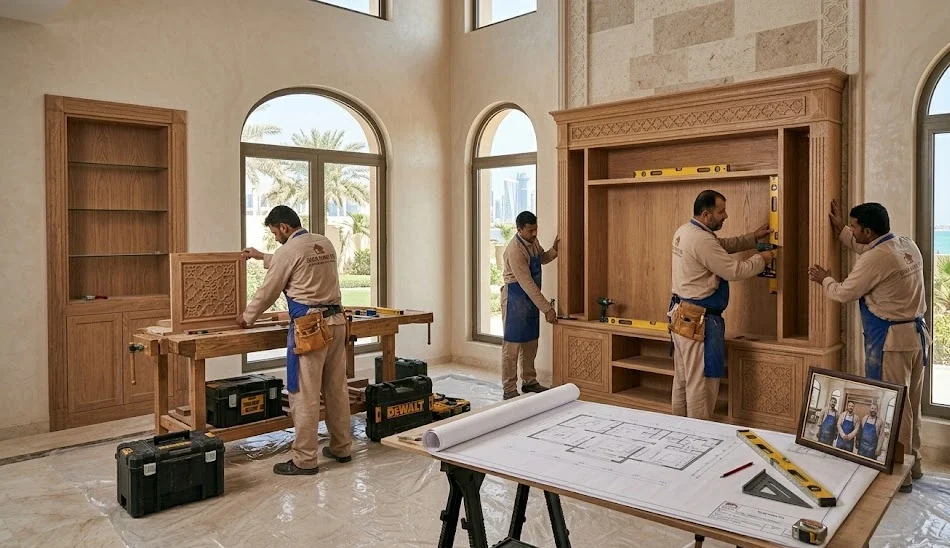
The team at Doha Home Fix works across residential villas, hotel interiors, serviced apartments, and commercial office fitouts across Qatar. They handle everything from a single loose chair joint to full furniture restoration projects involving antique or imported pieces that need matched stains, specialist adhesives, and surface refinishing.
If you have been searching for a reliable carpenter near me in Doha, Doha Home Fix is consistently rated among the top choices on Google Maps by local homeowners and property managers.
What a Professional Can Fix That DIY Cannot
- Full surface sanding and refinishing to remove deep scratches, oxidized finish, and UV bleaching
- Joint repair and reinforcement using moisture-resistant adhesives formulated for Qatar’s climate cycle
- Veneer re-bonding on bubbled or lifting surfaces
- Structural rebuilding of furniture where joints have fully failed
- Matched stain blending on repaired areas so the repair is invisible
- Hardware replacement with fittings suited to high-humidity and high-heat environments
Choosing Wood That Survives Qatar’s Environment
If you are buying new furniture or replacing a damaged piece, the wood species matters enormously. Not all timber handles the heat and humidity cycle equally well.
Species that hold up well in Doha:
- Teak: The gold standard for Qatar. Teak is naturally oily, dimensionally stable, and resistant to both moisture and heat. It is the most forgiving wood you can own here.
- Acacia: Dense-grained and slow to shrink or swell. Holds finishes well and looks excellent in both modern and traditional interiors.
- Engineered bamboo composites: Not technically wood, but worth mentioning. Bamboo composites handle humidity variation better than many hardwoods and are increasingly available in Qatar.
Species that struggle here:
- Softwoods like pine and fir are beautiful in temperate climates and genuinely problematic in Qatar. They expand and contract too aggressively and crack along the grain with enough seasonal cycles.
- Any unfinished or unsealed raw wood is essentially unprotected in this climate and will show damage within months.
If you are open to pre-owned pieces that are already acclimatized to Qatar’s environment, it is worth exploring used furniture available through Doha Home Fix. This practical option combines quality with cost savings.
Beyond Wood: Protecting the Full Piece
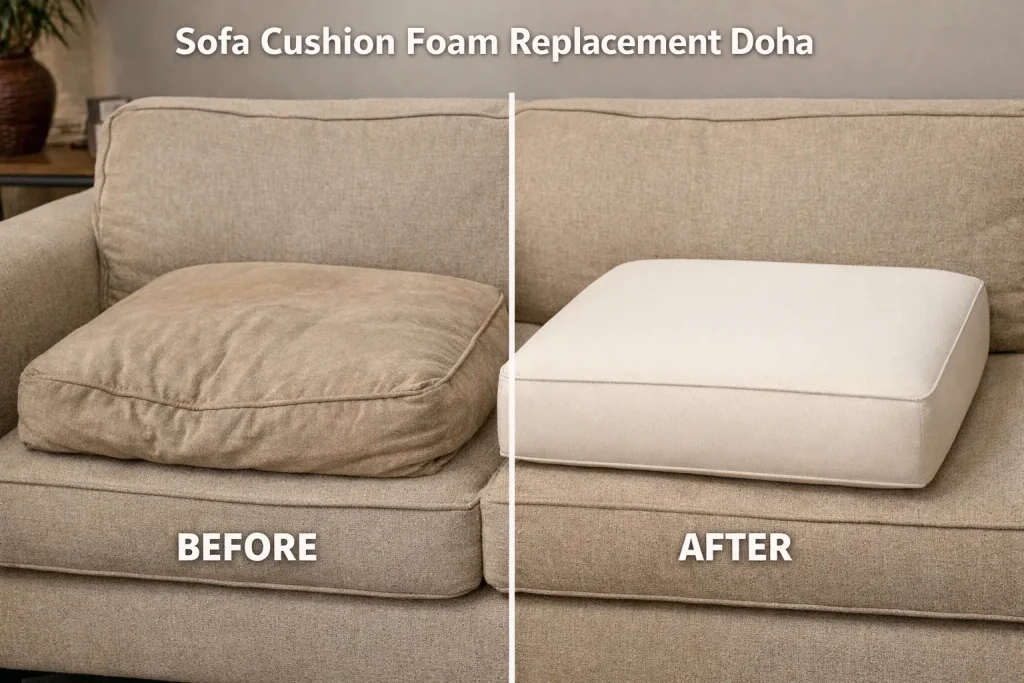
Wooden furniture often includes upholstered seats, cushioned backs, or fabric panels — and these elements suffer in Qatar’s climate, too. UV exposure fades fabric. Dry air weakens stitching. Heat accelerates the deterioration of foam padding.
If your sofa frames, dining chair seats, or upholstered headboards are showing wear alongside wood damage, sofa upholstery, and sofa repair through Doha Home Fix addresses both the structural frame and the fabric covering in one visit.
For ongoing smaller jobs — shelving installation, cabinet door realignment, hinge replacement, or anything that falls under general carpentry — the local carpenter service from Doha Home Fix is available for same-day and scheduled bookings across Doha.
Mistakes That Quietly Destroy Wooden Furniture in Qatar
These are not hypothetical errors. They are patterns the team at Doha Home Fix sees repeatedly when called in to repair furniture that owners thought was just aging normally.
- Silicone-based furniture sprays: They make wood look great immediately and create long-term problems. Silicone forms a barrier over the grain that prevents oil from penetrating. Over time, the wood dries out underneath a surface that looks fine. Removal requires stripping the finish entirely.
- Plants sitting directly on wood surfaces: Overwatered plants on a wooden shelf or sideboard will cause dark staining and soft rot faster than almost anything else. Use waterproof trays, always.
- Waiting too long to address small damage: A 5mm crack that appears in June will be a 30mm split by October if Qatar’s summer heat keeps working at it. Early repairs are quick and cheap. Delayed repairs are structural and expensive.
- Sunlight from even one window: A single window that catches two hours of direct afternoon sun will bleach and dry the furniture in its path within a season. It looks gradual until the finish is gone.
- Using the same cloth for dust and polish: Dusting cloths carry abrasive desert grit. Polishing with a contaminated cloth scratches the very surface you are trying to protect. Keep separate clothes for each task and launder them regularly.
Final Thoughts
Wood furniture can last generations in Qatar — but only if you treat it like the living material it is. The climate here will test it every single season. The difference between furniture that ages beautifully and furniture that falls apart comes down to whether you stay ahead of the environment or let the environment win.
Control the humidity, oil consistently, choose your species wisely, clean gently, and catch damage early. Do those five things, and your furniture will outlast your tenancy, your renovation, and probably several Qatar summers yet to come.
When the damage is already done — or when you want professional-level care for pieces that matter — the team at Doha Home Fix brings real local experience to every job.
Visit dohahomefix.com to book a consultation, or find them directly on Google Maps. The earlier you call, the more options you have.
FAQ: Wooden Furniture Care in Qatar
Q: How often should I oil wooden furniture in Qatar?
Every four to six weeks during summer and every eight weeks in cooler months keeps wood properly conditioned in Doha’s dry indoor air.
Q: Can air conditioning really damage wooden furniture?
Yes. Continuous dry airflow strips moisture from wood steadily, causing joints to loosen and surfaces to crack over one to two seasons.
Q: What is the best wood polish for Qatar’s climate?
Tung oil and beeswax-based products penetrate and nourish wood effectively. Silicone sprays block absorption and cause long-term damage.
Q: How do I fix a warped wooden table in Doha?
Minor warping can sometimes reverse with controlled moisture application and weighted pressure. Significant warping requires professional resurfacing.
Q: Is repairing old wooden furniture worth it in Qatar? Almost always yes. Professional repair on a quality piece costs far less than replacement and typically produces a better result.